I watched a rep try to sell $400/SF façade panels to an installer at a job site. Six months later, still no order. Meanwhile, his colleague was moving $80K/month in commodity siding - all through the same installer network.
The difference is product archetype. Whether you are a rep selling direct, through LBMs, or a combination, your pipeline growth and how you amplify sales varies according to...
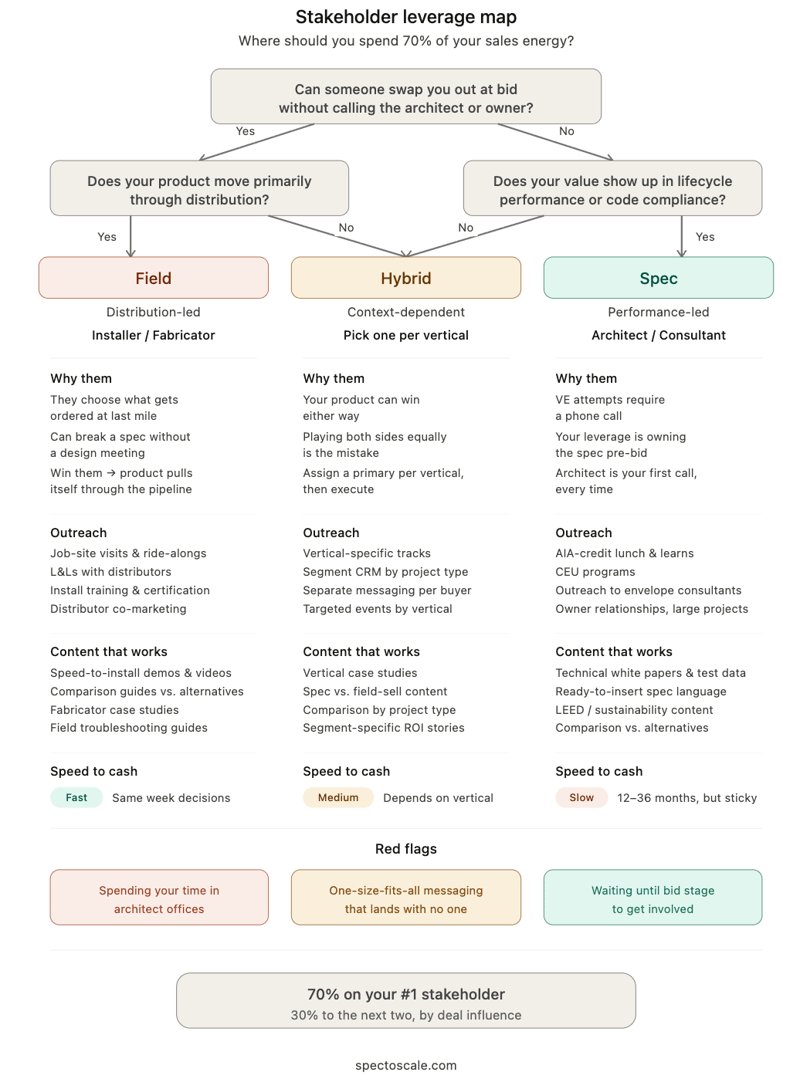
...THE THREE ARCHETYPES
1. STREET PRODUCTS (Installer-Driven)
I call them street products to be tongue in cheek. Obviously your product's quality, reputation, and support are table stakes. You need a differentiator too. But you also don't need to spend inordinate amounts of time or resources trying to get your product specified and waiting 18-24 months or longer to make your first sale. In any market or economy.
Examples: Stucco, commodity coatings, adhesives, caulking, standard metal panels
Strategy: Job site presence + distributor relationships = speed to cash
Red Flag: Trying to "educate architects" on commoditized solutions
Case Study: The asphalt sales person who makes $750K/yr in salary and commissions simply by selling asphalt in his metro area. My dear friends at Katabatic Manufacturing Corp who sell directly at job sites and who partner and cheer on their customers.
2. SPEC PRODUCTS (Architect-Driven)
Examples: ZS2, StoVentec Glass, Fireclay Tile, Longboard, A. Zahner, and other innovative and/or sustainability minded systems and products
Strategy: Lunch-and-learns, AIA credits, sample boards, solid & targeted lead gen strategy, specification intelligence, trade shows, drive-bys and blitzes
Red Flag: Expecting installers to "push" high-design products upstream
Case Study: StoVentec Glass. With a product that is made to order, made to size, and engineered for specific project, that takes 8-12 weeks to product, then ship, and requires extensive field verification, it's pretty hard to come in at the last minute. You want to be not just written into the spec but co-design along with the architecture team. And even that doesn't guarantee the sale is won.
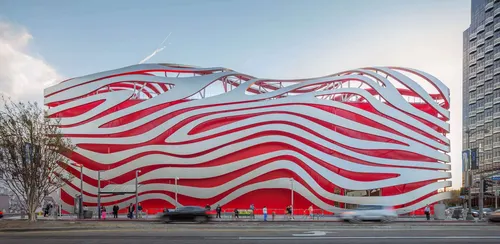
The Pedersen Museum, Los Angeles. Source: zahner.com
Decision Maker: BOTH (architect specs, installer influences substitutions)
Sales Cycle: Variable (3-12 months depending on entry point)
Strategy: Architect relationships for new builds + installer network for "or approved equal" captures
The Double-Edged Sword: "Or equal" language = opportunity for substitution BUT requires installer advocacy + performance credibility
Case Study
Products like a smooth-finished, grey, colored-in-the-mass high density fiber cement used in open joint applications in building envelopes. GC's care about lead times. With large projects calling for these replaceable finishes, the one that is in stock, or with the shortest lead time wins - even if it's slightly more in price.
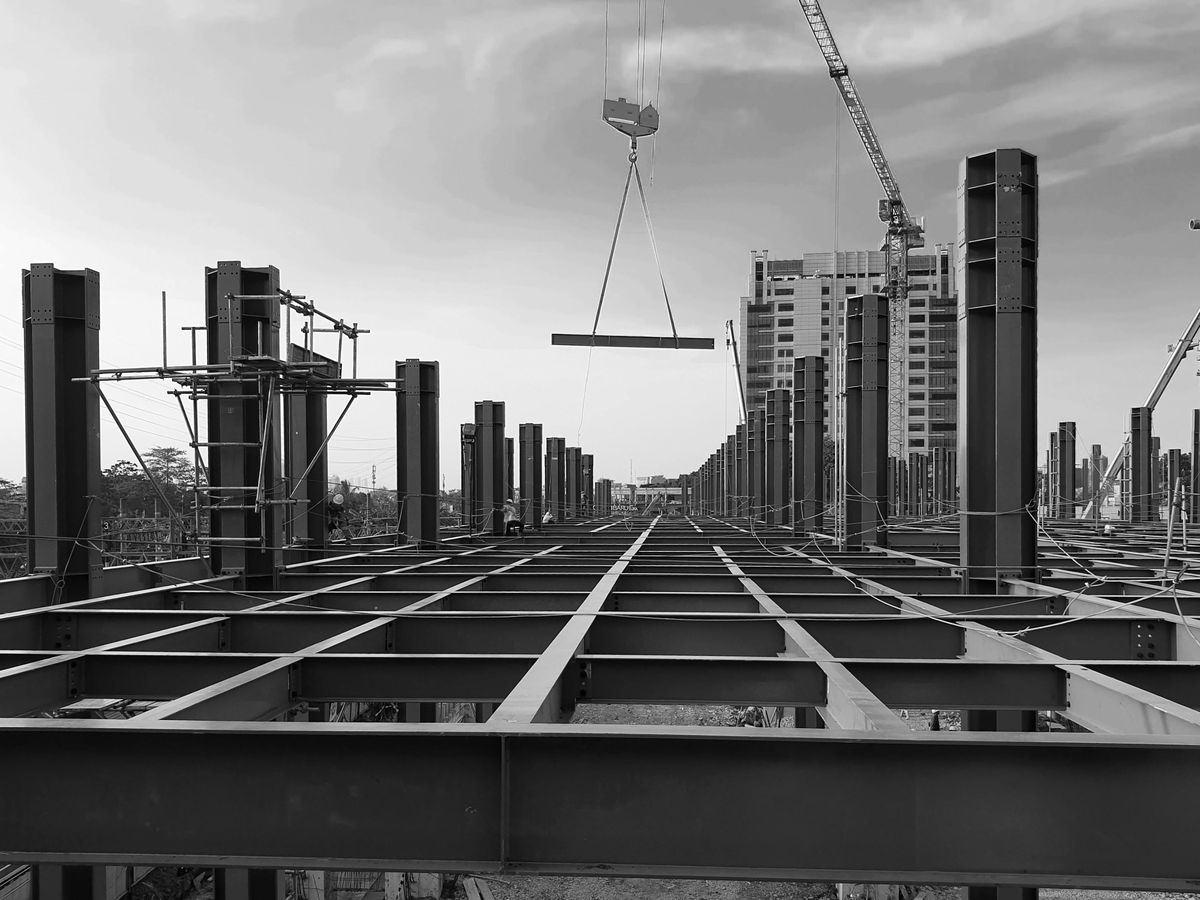
This is the biggest missed opportunity I see among newcomers and incumbents alike. The architect and specification aren't the only path to growing your pipeline and closing sales. Visit job sites. Get to know your top GCs and subcontractors and trade partners in your market. They open doors for you that others cannot.
Archetypes
Identify Your Archetype:
"Can an installer buy this without an architect's blessing?"
"Does the specification language say 'or approved equal'?"
"What's the average project delay if we're not specified by DD phase?"
Resources
Spend time and resources where you'll get the most results
Knowing your archetype is the easy part. Acting on it is a string of small choices, made week after week. The good part (or the trap?) is that every archetype eventually points you toward the job site. Whether it's the installer who buys without an architect's blessing, the GC weighing your lead time against "or equal," or the substitution you'll never capture from a conference room.
But the job site is the hard path. Architects are easier than GCs. Lunches are easier than mud. Driving past a job site is easier than walking it. A day on the phone with customers you know won't buy is easier than calling the ones who might.
Busy is not productive. Comfort is not coverage.
That is what I teach inside Project Fluent - whether a workshop for targeted problem areas, or the full cohort. We teach the work the comfort zone keeps reps from doing.
Technical mastery beyond product knowledge. Codes, certifications, plan reading.
How to use a set of plans to find your next three sales.
How to set the appointment with a GC and not waste the visit.
How to read what owners and developers need before they tell you.
How to get the most out of every job site visit, on the right side of the line, in a way that earns trust and grows pipeline.
Conclusion
Knowing your archetype is the strategy. Working the job site is the execution most reps skip. My 1-hour Project Fluent workshops make a team field-ready in a single session with spec defense, stakeholder savvy, and how to turn a site visit into your next three deals.